
Why construction time-lapse pricing depends on the real project scope
When teams ask for construction time-lapse pricing, they often want a quick reference cost. In practice, a time-lapse setup for a building site depends heavily on site conditions, project duration and the final content required. If the only question is “how much does one time-lapse camera cost” before the project context is clear, the estimate can easily miss important work or fail to reflect the actual scope.
For construction projects, a time-lapse system usually needs to operate over a long period, be installed at a suitable viewpoint, maintain power, manage connectivity, store image data and turn the captured material into a finished video at key stages or at project completion. A useful quotation therefore starts with a clear brief: how long the project will run, how many viewpoints are needed, what the video will be used for and which teams will review or publish the content.
This article explains the common factors that affect the cost of a construction time-lapse service and helps owners, main contractors, project management teams and communication teams prepare the right information before requesting a quote.
1. Project duration: the foundation of time-lapse cost
Project duration is one of the first variables to define. Monitoring a site for a few weeks is very different from documenting a project over many months or years. The longer the timeline, the more carefully the team needs to plan equipment continuity, operational checks, data management and post-production at each milestone.
The project timeline also affects how image data is organized. Time-lapse is not simply a matter of installing a camera and collecting files at the end. In many cases, project teams need monthly, quarterly, milestone-based or internal reporting videos. Each additional delivery milestone can add work for selecting images, editing, color adjustment, information overlays and file export.
- Short-term projects usually focus on documenting one specific construction phase.
- Long-term projects require a more stable plan for operation, storage and system checks.
- Projects with multiple reporting milestones often need more interim video versions.
2. Number of camera angles and the viewing scope required
The number of camera angles directly affects equipment, installation, image review, storage and post-production. One viewpoint may be enough for a smaller site or when the goal is to show an overall site transformation. But when a project has several active zones, multiple elevations or parallel construction stages, a single angle may not capture progress sufficiently.
When building a quote, it is important to clarify the purpose of each camera angle: showing the overall site, tracking a critical work package, observing the main construction zone or creating communication material for handover. Defining the role of each viewpoint helps avoid installing too few cameras and missing key information, or installing too many without adding clear value.
- A wide overview angle helps show the overall transformation of the site.
- A detail angle is useful when a specific zone or key work package must be followed.
- Multiple angles give post-production more material to work with, but they also increase processing workload.
3. Installation position and site access conditions
The installation position affects not only image quality but also the method of setting up the system. A strong viewpoint should have a stable line of sight, remain as unobstructed as possible over time and allow the equipment to operate safely for an extended period. In reality, construction sites keep changing: cranes, scaffolding, materials, containers, trees or nearby structures can all affect the frame.
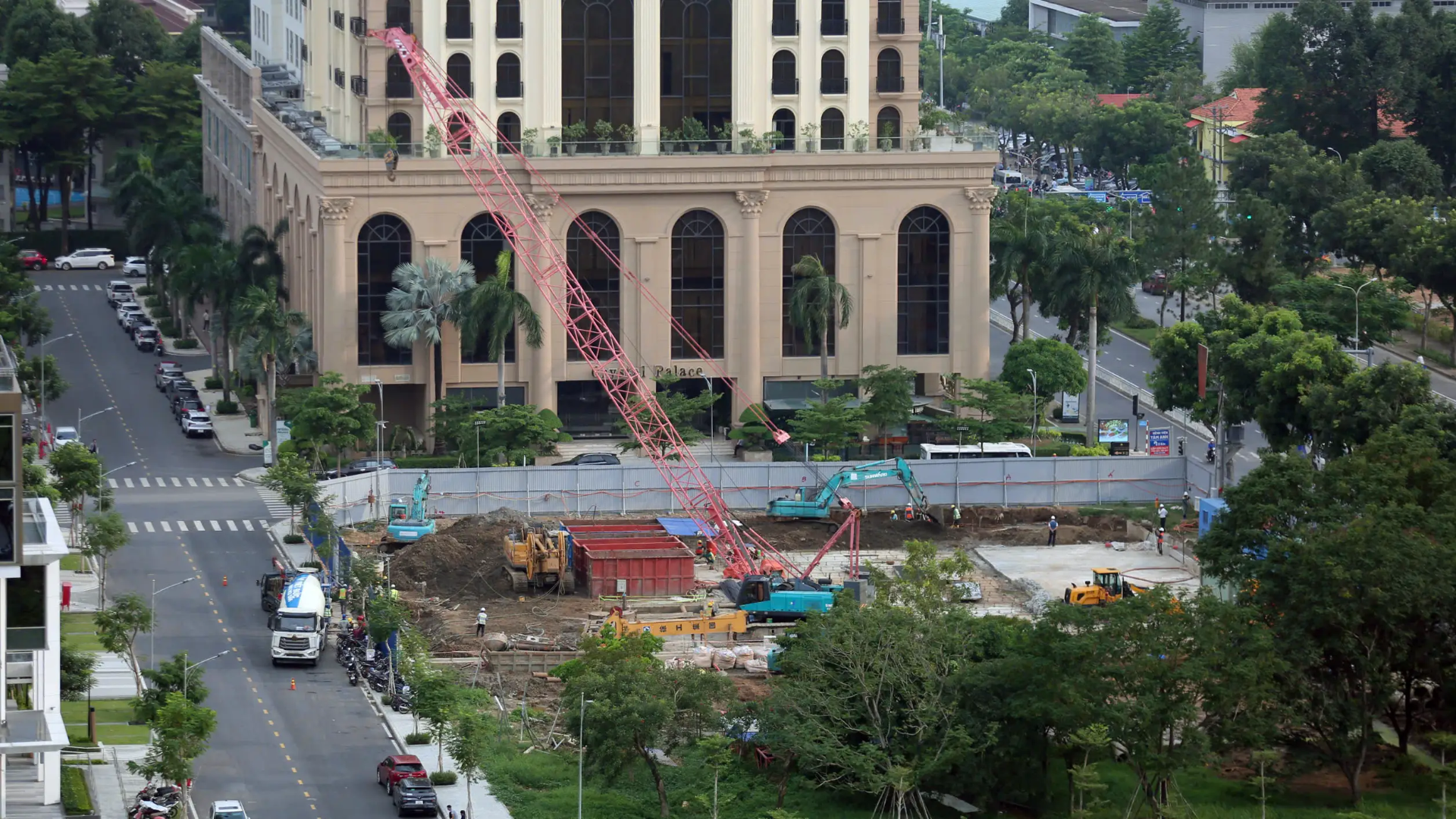
Amaa Media construction site, captured from a distance of 350m using a 70-200mm f/4 lens.
Cost can also change if the installation point is difficult to access, requires coordination with building management, needs repeated surveys or requires a mounting approach suitable for the site. For larger projects, viewpoint selection should usually involve the production team, project management team and safety stakeholders so the frame is useful without disrupting site operations.
- A high and stable position often improves visibility but still needs installation assessment.
- A location that may become blocked can reduce the visual value of the time-lapse over time.
- A location requiring permits or coordination with multiple parties can extend preparation time.
4. Power, connectivity and operational stability
A long-term time-lapse system needs a plan for stable operation. Power availability on a construction site can change from one phase to another, so the quote should clarify the power source, expected continuity and coordination responsibilities when site conditions change. If power is unstable, the operation and inspection plan needs more careful consideration.
Connectivity is also important when the project requires remote image review, system status checks or periodic data transfer. Every site has different network conditions, so pricing should reflect the actual requirement: local storage only, scheduled data transfer, or more frequent updates. A single connectivity model should not be assumed for every project.
- Stable power helps reduce the risk of interrupted capture.
- Appropriate connectivity makes status checks and data access more convenient.
- The more complex the operating environment is, the more important survey and setup become.
5. Image storage and data management throughout the project
Construction time-lapse generates a large amount of image data over time. Without naming technical figures before a project is defined, it is safe to say that longer duration, more camera angles and more frequent capture all increase the need for storage and data management. This part is often overlooked when teams compare only the cost of equipment.
Storage cost is not only about capacity; it also involves organizing files so they can be checked, retrieved and edited efficiently. A project that needs regular reporting will require a clearer file management process than a project that only needs a final summary video. If the time-lapse material will also support marketing, recruitment, investor relations or internal communications, preserving the source material becomes even more important.
- Data should be organized by time, camera angle and project milestone.
- Regular retrieval needs can increase file management workload.
- A clear storage plan helps post-production move more smoothly.
6. Post-production: turning scheduled images into a progress story
The final value of time-lapse is not only in scheduled image capture but also in the finished video. Post-production turns image data into a watchable story: selecting key phases, adjusting the image, shaping the edit rhythm, adding titles, milestone information, logos, music or formats for the chosen channels. For that reason, post-production is a significant part of the quotation.
A video for internal reporting may need a clear, direct edit focused on progress. A video for brand communication may require a more engaging rhythm, additional footage or graphic design if requested. When deeper finishing is needed, a time-lapse project can connect with video post-production services to create a more polished version for each use case.
- A progress reporting video should be clear, easy to understand and aligned with project milestones.
- A communication video needs more attention to rhythm, branding and visual impact.
- Multiple use cases often require multiple formats and exported versions.
7. Number of deliverable versions and content channels
A time-lapse project may require several deliverable versions: a full project summary, phase-based edits, short cuts for social media, event presentation videos, or versions without music for internal archiving. Each version may require a different duration, aspect ratio, subtitle approach, information overlay and finishing level.
For that reason, companies should describe where the video will be used when requesting a quote. Content intended only for documentation is different from content published on a website, sent to investors, shown at an opening ceremony or posted on communication channels. If the project also needs spatial experience or other site documentation assets, a 360 virtual reality solution may be worth considering when it fits the project goal.
- The more versions required, the more editing and review time is needed.
- Each content channel may require a different aspect ratio and presentation style.
- Defining outputs early helps the quote match the actual need more closely.
8. What to prepare before requesting a construction time-lapse quote
A clear brief helps the production team understand the scope, recommend a suitable approach and avoid an estimate that is too generic. Companies do not need every technical detail at the beginning, but they should prepare core information about the project, timeline, location, intended use and delivery expectations.
Before getting in touch, you can prepare the following information to make the consultation more efficient:
- Project type, location and expected implementation period.
- Purpose of the time-lapse: progress monitoring, reporting, communication or archiving.
- Number of areas to observe or the preferred number of camera angles.
- Expected conditions for installation position, power and connectivity.
- Milestones that require interim videos and the number of final deliverable versions.
Frequently asked questions about construction time-lapse pricing
Can a construction time-lapse project be quoted before a site survey?
A preliminary estimate is possible when information about project duration, location, camera angles and intended use is available. However, for complex sites, a survey or detailed discussion about site conditions helps make the quotation more realistic and reduces the risk of unexpected changes.
Will the cost increase if the project runs longer than planned?
In general, a longer implementation period increases operation, storage, data checking and may add more content deliveries. For that reason, project duration should be clearly defined in the quotation scope.
Is one camera angle enough for the whole site?
It depends on the scale of the site and the purpose of the video. One wide angle may be enough for some projects, but large sites or projects with multiple important work zones often need additional viewpoints to tell a fuller progress story.
Can construction time-lapse replace a security camera system?
Time-lapse supports progress documentation and creates a summarized video over time, but it should not be considered a complete replacement for a security camera system. The two systems serve different purposes and should be assessed according to the project’s needs.
Should we request multiple video versions from the start?
It is best to identify the main content channels as early as possible, because versions for reports, social media, websites or events may differ in duration, aspect ratio and presentation style. This helps the quotation and post-production plan match the actual need.
Conclusion: a better quote starts with a clearer brief
Construction time-lapse pricing depends on many factors: project duration, number of camera angles, installation position, power, connectivity, storage, post-production and the number of deliverable versions. There is no single fixed cost that fits every project before the goals and site conditions are understood.
If you are preparing a time-lapse setup for a construction project, start with a short brief covering the project, intended use and desired delivery milestones. The Amaa Media team can discuss the right scope through the submit a brief page and help you define a clearer implementation approach.